Launch Llama is a useful launch directory for SaaS and AI founders, but it is not a shortcut to customers. It combines a permanent product listing, launch feed, newsletter inventory, paid placement, directory-submission packages, and free founder tools. That makes it more substantial than a basic “submit your startup” form. It does not make traffic, rankings, or sales inevitable.
This is an editorial desk review, based on Launch Llama’s public site, pricing, FAQ, and product pages checked on October 22, 2026. We did not buy a Featured plan or newsletter placement, so we cannot honestly claim a return on ad spend, traffic, or sign-ups on its behalf.
Our take: Submit for free if a roughly four-week review wait works for your schedule. Consider Instant Launch only when timing matters. Treat Featured and newsletter placements as measurable marketing tests—not SEO charms—and buy them only when your landing page, offer, and attribution are ready.
Rating: 7.6/10. A credible supporting channel for the right founder product; not a growth engine in a box.
Key takeaways
- Launch Llama is a product directory and distribution bundle, not only a leaderboard.
- The free route is the sensible first move when you can wait for review.
- Instant Launch costs $39 one time to skip the review queue, according to its current pricing page.
- Featured placement can be worthwhile for a focused campaign, but its value depends on audience fit and tracked conversions.
- A DA 74 dofollow link and AI-search visibility are potential benefits, not promises of rankings, citations, or customers.
- The mini-app library is a real differentiator because it gives founders a reason to revisit the site outside launch day.
For a wider view of how directories, communities, and launch boards differ, see our guide to launch platforms. If a no-cost path is your priority, start with the best free launch platforms.
What Launch Llama actually is
Launch Llama is aimed squarely at startup software, AI tools, developer tools, and founder products. Its central offering is a public, category-based product page. Around that page, it has built weekly launches and upvotes, a newsletter operation, paid visibility, directory-submission services, and a broad set of small utilities for founders.
That bundle is the point. A launch listing can keep working after the first announcement rather than disappearing with yesterday’s feed. The audience is clearly founder-to-founder, which is an advantage when you sell a SaaS product, developer tool, or other work product. It is less compelling for a consumer product whose buyers do not browse startup media.
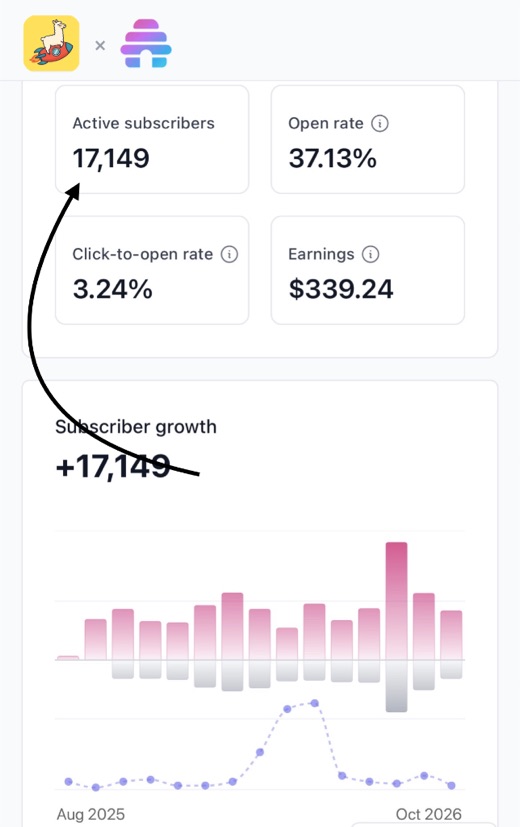
Launch Llama publishes this dashboard as evidence of one newsletter audience. It is useful context, but it is publisher-supplied evidence—not an independent audit.
Is Launch Llama free?
Yes. The free listing costs $0 and, according to Launch Llama’s FAQ, goes through review in about four weeks. Approved listings are described as receiving a permanent dofollow backlink from the site. There is no credit card required for that route.
That is a fair offer. Four weeks is too slow for a coordinated launch, but it is perfectly reasonable when the goal is a durable product page, a relevant citation, and possible referral traffic. The trade-off is time rather than money.
The important distinction is that a free listing is not a newsletter campaign. Launch Llama says a free listing can be selected for an editorial newsletter feature, but it does not promise one. The chance of a feature is not the same as buying one.
Use the free route when:
- your product is already live and your timing is flexible;
- you want an extra public page that can remain useful after launch day;
- you have a clear tagline, accurate categories, and credible screenshots; and
- you will check the final listing after it publishes.
If you are planning a fixed-date campaign, do the preparation first. Our product launch checklist is a good starting point: test the destination page, decide how you will measure activation, and make sure someone can answer feedback when it arrives.
Pricing: free, Instant Launch, Featured, and newsletter ads
Launch Llama’s current pricing page presents several routes. The most relevant ones are below.
| Option | Publicly stated price | What it is for | Our read |
|---|---|---|---|
| Free | $0 | Standard listing after review | The sensible default for many early-stage tools. |
| Instant Launch | $39 one time | Skip the review queue and publish now | Worth it when timing has real value. |
| Featured | $23/week, billed at $99/month | Pinned placement, instant launch, analytics, social distribution, and a recurring newsletter entitlement | Treat it as a campaign and track results. |
| Newsletter ad | $199 for one send | Dedicated newsletter placement plus stated social promotion | Only makes sense when the readers plausibly match your buyer. |
There is one detail worth checking before checkout. The pricing page says Featured includes one newsletter feature per four weeks for an audience of 20,000+ founders. Other pages refer to a larger 65,000+ founder network, while the FAQ also uses a $29/week Featured starting point. Those statements may refer to different packages, audiences, or an earlier price. They are not necessarily contradictory, but they are easy to misread.
Ask four direct questions before spending: Which newsletter will carry the promotion? How many recipients does that specific placement reach? Is the placement editorial, included in a plan, or a separate paid ad? What performance report will you receive?
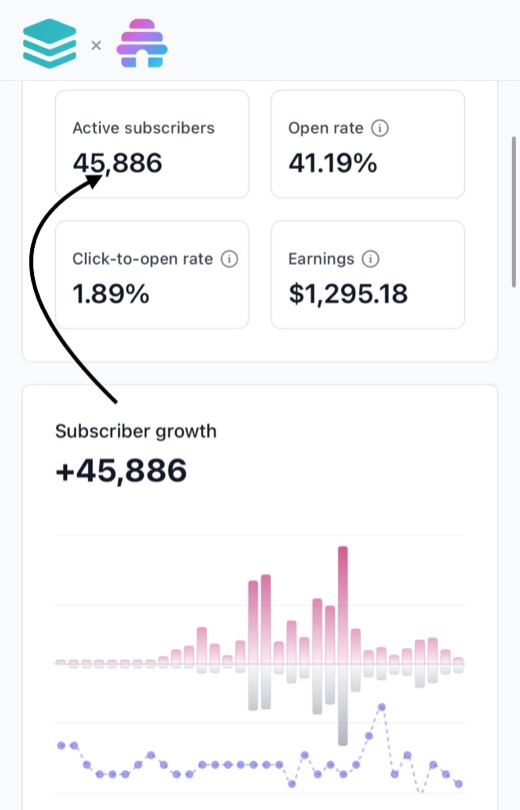
Launch Llama presents Launch Llama and The Stack as separate newsletter audiences. A quoted reach number should be tied to the exact package, not assumed to mean every list at once.
The paid options start making sense when you know your unit economics. If a qualified trial is worth $10 and one in ten relevant visitors starts a trial, you can calculate how much traffic a placement must generate. Without that basic math, a subscription or sponsorship is mostly a hope purchase.
Backlinks and AI visibility: useful, but not guaranteed outcomes
A permanent dofollow product page on a site that reports DA 74 can be valuable. It gives search engines another consistent reference to crawl, can strengthen a product’s web presence, and may send relevant referral traffic. Those are all legitimate reasons to earn a listing.
But Domain Authority is a third-party metric, not a Google promise. A backlink is not a ranking button, and a directory page will not compensate for thin content, a confusing product page, or no demand. The right question is: would you still want the listing if the SEO effect were modest? If the answer is yes because it can help visitors discover a relevant product, it is probably a worthwhile link.
Launch Llama also shows an example of one product page appearing in a Google AI Overview. That is encouraging as a case study, not proof that every product listed there will be cited by Google, ChatGPT, Claude, or Gemini. AI systems retrieve information selectively, and no directory can guarantee a citation.
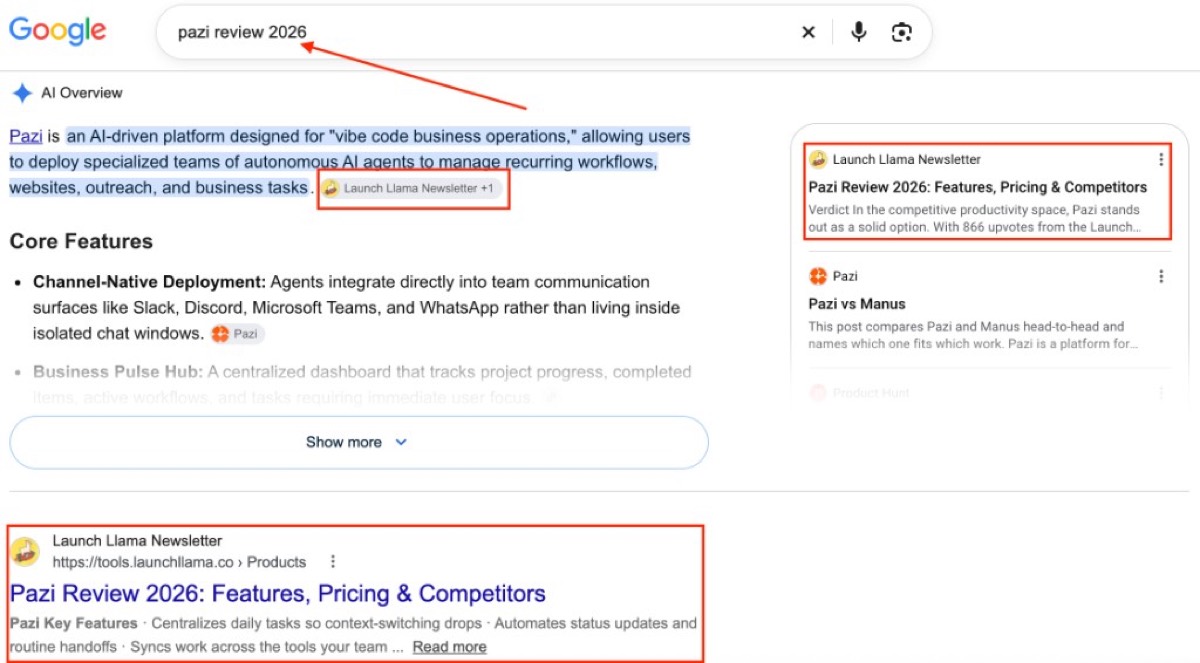
One example shows that this can happen. It is not evidence that it will happen for every listing.
If AI-search visibility is part of your plan, keep the listing in perspective. Publish useful material on your own domain, keep company information consistent across the web, earn relevant mentions, and track the referrals that become active users. Our guide to getting cited by AI search and dofollow backlink guide explain the limits in more detail.
The underrated part: Launch Llama’s free mini-apps
The mini-app library is the most interesting part of the product. It includes a website grader, competitor landing-page analyzer, SEO checklist, domain-authority checker, backlink checker, subreddit finder, and several X-focused research tools.
This is more than decoration. A directory that exists only on launch day has a retention problem. Useful tools give founders a reason to return, and repeat visits make discovery less dependent on one launch window. That is a more credible distribution model than a neglected directory that simply promises traffic.
Still, use the outputs as prompts for investigation. A competitor-page clone or X score cannot choose your positioning for you. Let a tool surface a weak headline, missing metadata, or relevant community—then use judgement to decide what to change.
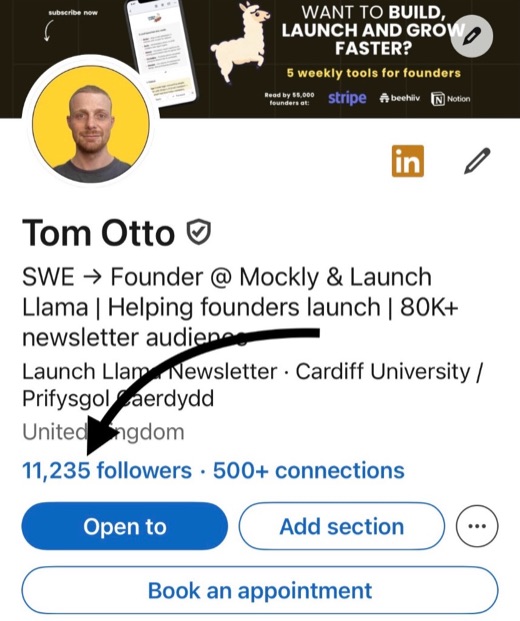
The project is attempting to build distribution across search, email, social, and utilities rather than relying on one directory page. That is a sounder model, provided the reach matches your audience.
Directory-submission packages: review the destinations, not the headline
Launch Llama also sells manual directory-submission packages: $99 for 30 directories, $149 for 60, and $199 for 100+. For a founder who dislikes repeating the same form, that may be a reasonable exchange for time.
It is also the part that needs the most scrutiny. “100+ directories” sounds useful even when some destinations are irrelevant, poorly maintained, or rarely visited. Before buying, ask for the exact directory list or the selection criteria. Check topical relevance, indexing, editorial maintenance, and whether the site has readers who could actually care about your product. A small set of strong, relevant listings is usually better than a spreadsheet full of abandoned link farms.
Also ask what the final report means: submitted, accepted, live, indexed, or queued? Those are not interchangeable results. If backlinks are your primary objective, compare the offer with our list of dofollow backlink sites for startups before making a decision.
Who should use Launch Llama?
Launch Llama is a good fit for:
- indie SaaS founders and AI-tool makers;
- developer-tool teams that benefit from a permanent public listing;
- B2B products whose customers overlap with founders, operators, and marketers;
- teams with a conversion-ready landing page and basic attribution; and
- marketers testing a newsletter placement with a defined budget and success metric.
It is a weaker fit for mass-market consumer products, launches that need a huge one-day conversation, or teams that have not yet figured out their message. In those cases, improve the positioning and customer research before paying for distribution. No directory can do that work for you.
For a tailored shortlist based on timing, budget, and launch goal, try LaunchAF’s free Launch Platform Matcher. Its recommendations are editorial, not traffic predictions, but it is a useful way to compare the trade-offs.
Where Launch Llama is strong—and where it needs more proof
What it does well
- A low-risk entry point. The free route allows founders to test the channel before spending.
- An evergreen proposition. A public product page can remain useful after launch-day attention fades.
- A wider distribution bundle. Listing, newsletter, social, backlinks, and services are easier to evaluate when they sit together.
- A visibly active product. The launch feed, product catalog, and founder tools make the directory feel maintained.
- Useful tools beyond submissions. Mini-apps give the site a reason to attract returning visitors.
The limits to remember
- The free queue is long for a launch platform. Four weeks is fine for an evergreen listing, not a fixed-date announcement.
- Large marketing claims still need attribution. Reported subscribers, reach, DA, and AI discovery matter only when they lead to your own measurable outcomes.
- Plan wording needs close reading. Featured price points and audience numbers vary across the public pricing and FAQ copy.
- Founder attention is not customer attention. The audience match is strong for startup and B2B products, weaker for many other markets.
- Directory submissions are easy to overbuy. Count relevant, live placements—not just the number submitted.
Frequently asked questions
Is Launch Llama worth it for a new SaaS?
It can be. Start with the free route when you can wait for review and want a durable product page. Pay for Instant Launch when you need publication now. Consider Featured or newsletter advertising only when you know who you need to reach and how you will measure the result.
Is a Launch Llama backlink good for SEO?
A permanent dofollow product-page link can be a useful part of a wider SEO strategy. It does not guarantee a ranking increase, a Domain Rating improvement, or an AI citation. Look at relevance, referral potential, and the quality of your own website—not just the directory’s metric.
Does Launch Llama guarantee newsletter exposure?
No. A free listing may be selected for editorial coverage, but that is not guaranteed. Featured inclusions and paid newsletter ads are different products with different stated audiences. Confirm the exact placement and reporting before you buy.
Is Launch Llama better than Product Hunt?
They serve different needs. Product Hunt is better known for launch-day attention and broad early-adopter conversation. Launch Llama is more useful when you want an ongoing directory page, a backlink, and a route to founder-focused newsletter distribution. Many founders can use both as separate, measured channels.
The bottom line
Launch Llama is worth adding to a launch stack, especially through its free tier. It has more substance than the average startup-submission site because it is trying to build a recurring founder audience and useful tools around the directory.
Keep the order of operations right: first make the landing page clear; then submit for free; then measure referral traffic, qualified trials, demos, and sign-ups. If the listing shows promise—or if timing genuinely matters—buy Instant Launch or run a tightly scoped Featured test. Do not buy because words like “backlinks,” “AI visibility,” and “65K founders” sound reassuring in a headline.
For the right B2B founder product, it is a fair and useful proposition. For everyone else, it is a distribution experiment—not a growth engine in a box.
Ready to compare launch options for your product? Use the Launch Platform Matcher or submit your product to LaunchAF when you are ready for a weekly launch.
Sources and methodology
This review was checked against Launch Llama’s public homepage, launch overview, pricing page, FAQ, and mini-app library on October 22, 2026. Screenshots in this article are publisher-provided Launch Llama assets reproduced for review context.